Beer body starts before the first hop goes in. It begins with the grist, the mix of grain a brewer chooses, and it changes the weight, texture and foam you notice in the glass. A beer can feel crisp and light, or it can carry a softer, creamier fullness. Malt is a large part of the reason.
The grain gives the beer its framework
Base malt makes up most of a beer's grain bill. It supplies the starch and, after mashing, the sugar that yeast can ferment. But base malt is not simply a source of alcohol. Its character helps set the starting point for flavour and body.
Specialty malt works in smaller amounts. It can add colour, aroma, sweetness, body and head retention, although it should not be relied upon to increase alcohol. The maltster's use of heat is what opens up those differences. Kilning preserves the starch and enzymes needed for brewing, while roasting creates darker malts and a wider range of flavours.
That is why a brewer can build such different beers from grain. A light caramel or crystal malt can bring body and a malty sweet background. Munich malt can add a bready character. Biscuit malt can bring toast and a warm, nutty note. Roasted barley and dark malt take things towards coffee, cocoa, dryness or a sharper roasted edge.
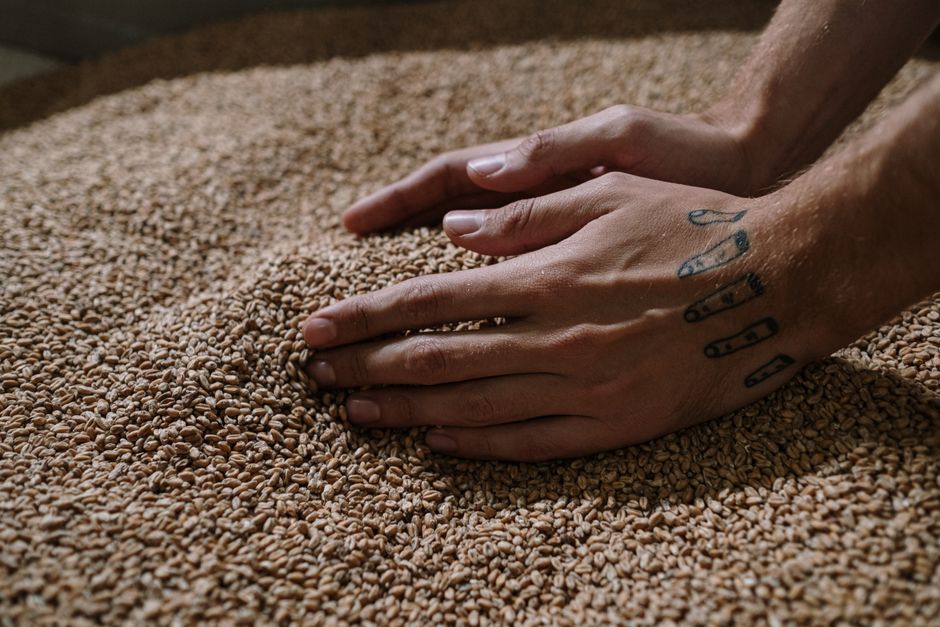
Choosing fullness without losing balance
So what does that change? The most useful malt choices do more than make a beer taste darker or sweeter. Protein rich grains such as wheat, oats and flaked barley can support body and head retention. Larger proteins and polypeptides help foam form and hold, while beta glucans and arabinoxylans add viscosity and a creamier feel.
Dextrin malt is another common choice when a brewer wants more body with little colour change. Dextrins are carbohydrates that do not ferment, so they can increase body and viscosity without raising alcohol. Caramel and crystal malts can also add sweetness alongside that fuller feel.
- Light caramel or dextrin malt. Used in modest amounts, these can give a beer more body and support foam without making it much darker.
- Wheat, oats or flaked barley. These bring protein and longer carbohydrates that can make a beer feel softer, creamier or more substantial.
- Munich, biscuit and toasted malt. These choices add body with bready, toasted or nutty character.
- Roasted malt and barley. These suit beers that need colour and roast character, but larger amounts can push the beer towards burnt or charcoal flavours.
It is still a matter of balance. Too much body can feel heavy, and too many specialty malts can blur the individual contributions. A brewer may also change body through mash temperature, fermentation and carbonation, so no single grain does all the work.
For a drinker, malt selection is often the explanation behind a beer that feels right for its style. A pale beer can still have a smooth mouthfeel and a lasting head. A dark beer can be dry rather than sweet. Once you begin noticing those choices, the body of a beer becomes part of the story in every glass.